Market outlook
Rising Outlook 8/10
The card benefits from strong mascot-driven demand, premium art appeal, and a collector base that extends beyond set-specific buyers. In the near term, prices often strengthen as supply tightens and grading top-pop copies become harder to source. Even when modern cards cool, iconic Pikachu chase cards usually hold value better than ordinary ultra rares.
Next months. Likely to remain firm to slightly rising, especially for graded 10 and pristine examples, with raw pricing more volatile based on supply availability.
Long term. Over 1-3 years, likely to appreciate gradually if the set remains a notable modern chase and if overall Pokémon collector demand stays strong; lower-grade copies may be more price-sensitive than top-graded copies.
History
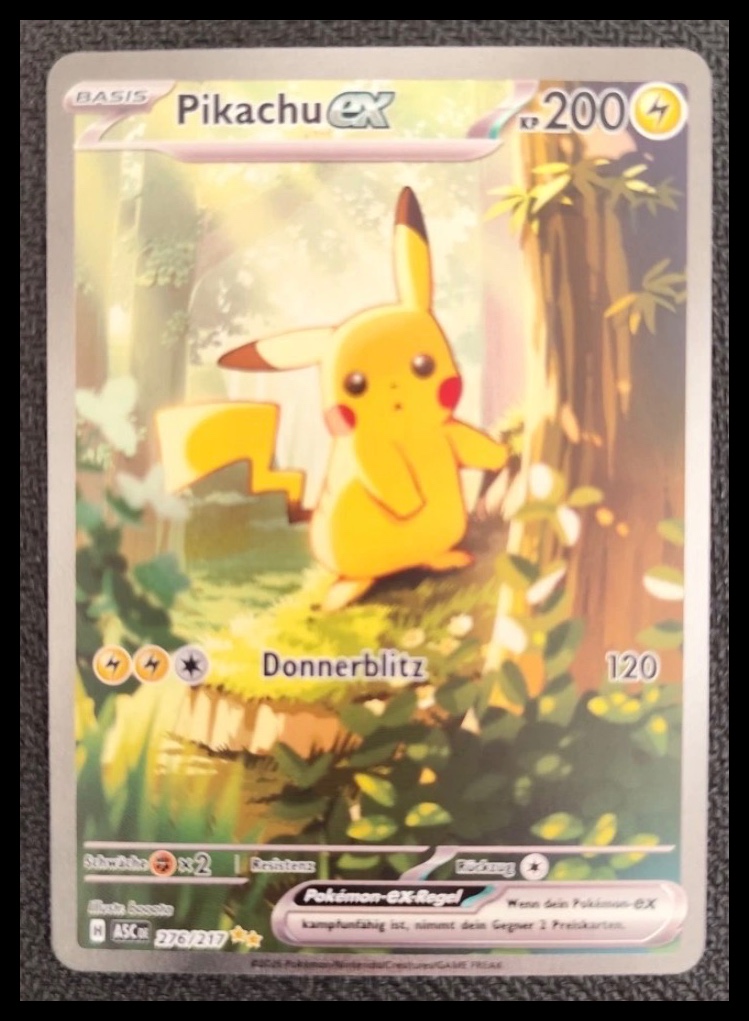
Pikachu is the franchise mascot of Pokémon, first introduced in the original 1996 games and soon becoming the most recognizable character in the brand. As the electric-type partner of Ash Ketchum in the anime and a centerpiece of the Trading Card Game, Pikachu cards consistently rank among the most collected and most liquid modern Pokémon releases. This card’s ex form reflects the modern mechanic where stronger Pokémon ex grant extra Prize cards when Knocked Out, and Special Illustration Rare treatment elevates Pikachu into a premium chase-card status.
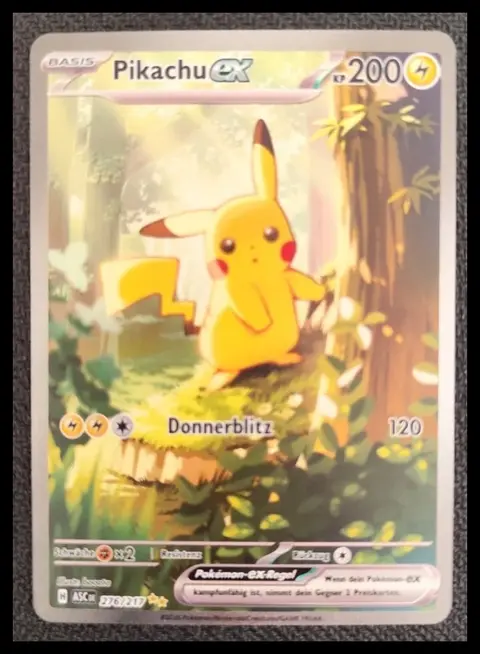
This card appears to first have been released in the Ascended Heroes expansion in 2026, with the English version listed as Pikachu ex #276/217 and related listings showing #277 for some market databases. The set and numbering indicate a late-2026-era release for the main English and European markets, with German-language copies following the same international expansion release window.
- Pikachu ex is one of the flagship chase cards of Ascended Heroes and is heavily sought after because Pikachu demand transcends normal set popularity.
- The card exists as a Special Illustration Rare / SIR-style premium version, which is typically the top-tier collector pull for a modern main-set or special-set Pokémon card.
- Market data shows very strong raw and graded pricing relative to most modern Pokémon cards, indicating significant collector premium and speculative demand.
Collector notes
Condition. Check for centering, especially left-right and top-bottom alignment, as modern SIR cards often grade down due to centering alone. Inspect the black or dark border areas for whitening, edge chipping, and silvering on corners. The holo and textured surface can show faint print lines, roller marks, or micro-scratches under angled light. Also verify that the card has a clean surface with no dents, pressure marks, or manufacturing dimples, which are common on premium modern foils.
Storage. Store immediately in a penny sleeve and rigid top loader or card saver, then keep in a humidity-controlled environment away from direct light. For valuable copies, use acid-free materials and avoid frequent handling; fingerprints and surface scratches can quickly reduce grade potential. If submitting for grading, keep the card sleeved and avoid double-sleeving with overly tight fits that may create edge wear.
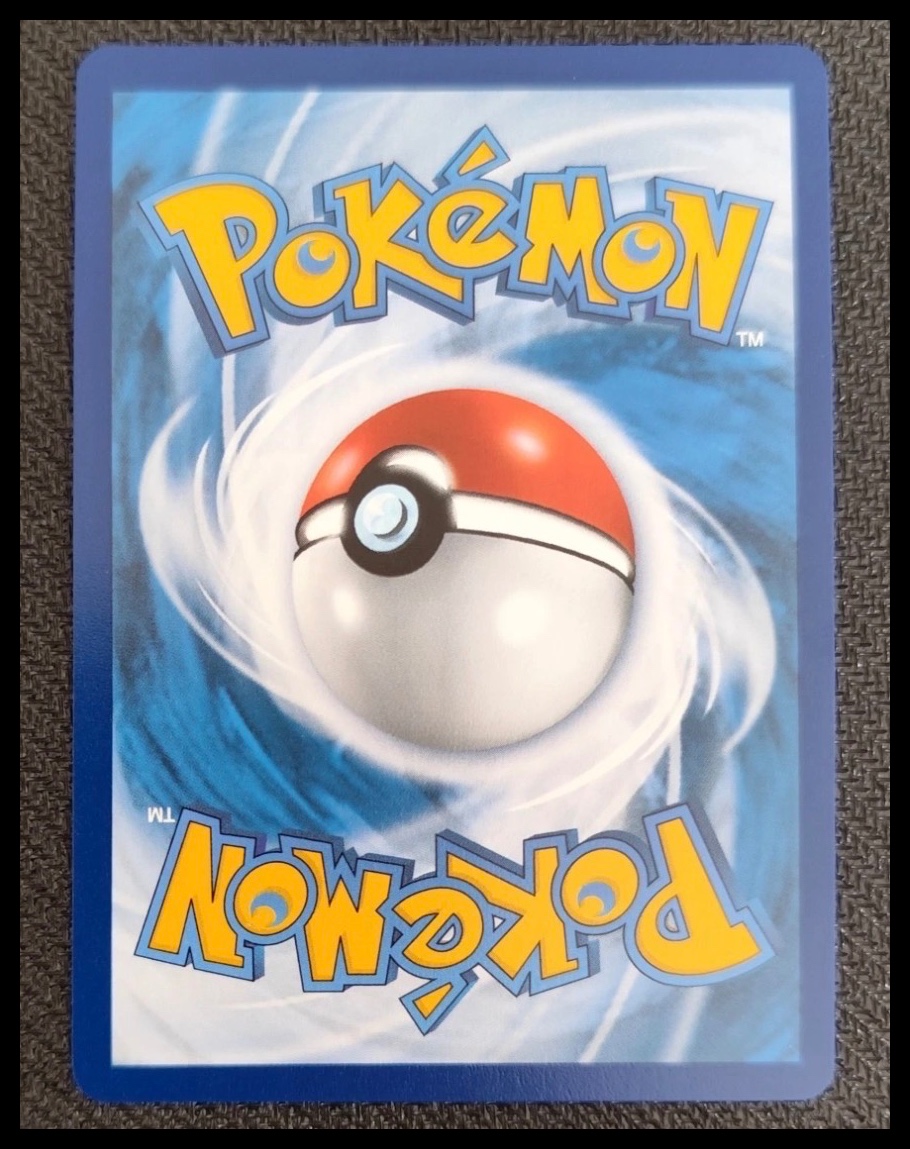
Authenticity. Compare the print texture, font sharpness, and holofoil pattern against verified copies from reputable sellers and grading-image references. Authentic modern Pokémon cards should have consistent card stock, crisp borders, and properly aligned text and set symbols. Counterfeits often show washed-out colors, flat or incorrect texture, poor centering beyond normal factory variance, and malformed energy symbols or collector numbering. For high-value copies, third-party grading and purchase history from trusted marketplaces are strongly recommended.